
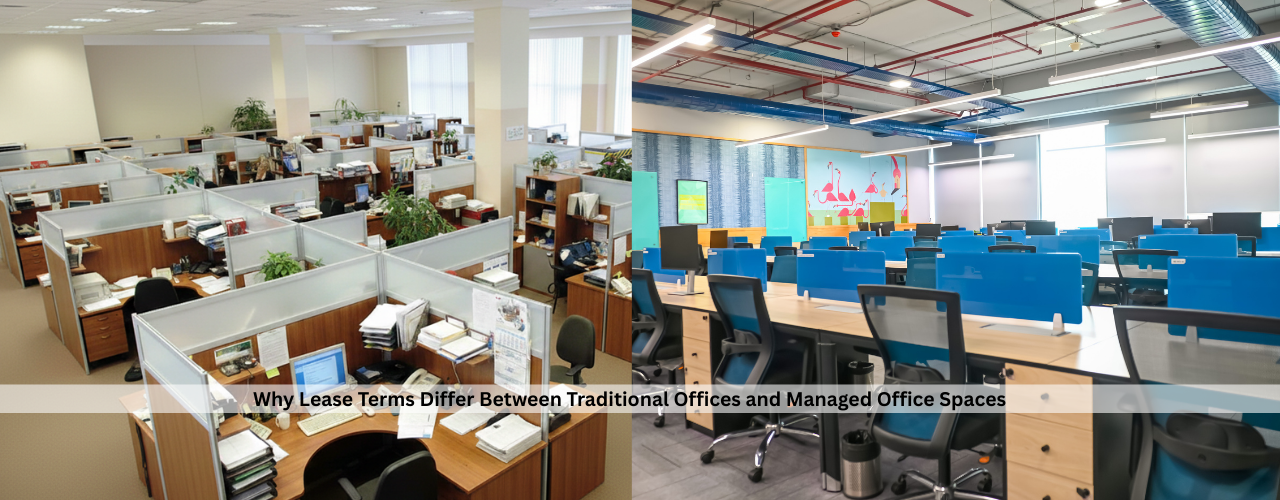
Commitment Length: Stability vs Flexibility
Landlords for regular offices require steady payments over time to cover construction and ongoing expenses, leading them to push for long-term leases to protect their investment. While this offers stability, it locks the tenant into a rigid contract.
In contrast, managed offices operators sign the long leases themselves and break the space into smaller, flexible segments for different clients. This model allows businesses in fast-moving cities like Hyderabad to reduce uncertainty by avoiding the trap of locking capital into assets they may not fully need.
Cost Structure: Transparency and Predictability
Traditional rents might appear cheaper per square foot initially, but they only cover the physical walls. Tenants are then responsible for furniture, internet, cleaning, and administrative management, which adds up in both cost and time.
Managed offices roll every operational expense into one monthly fee. While the upfront cost may look higher, it provides a level of predictability that many modern companies value over the complexity of managing multiple vendors and unpredictable utility bills.
Control and Customisation: The Trade-off
Traditional offices provide maximum control, allowing tenants to brand the space and change the layout completely because landlords expect a long-term stay. Managed offices are designed to balance flexibility with efficiency.
While managed spaces must remain adaptable for future occupiers, they can still be thoughtfully customized to meet a client"s branding needs. For fast-growing businesses, the trade-off often favors speed and the ability to move in immediately over a completely bespoke build-out.
Risk, Scalability, and Legal Simplicity
In a traditional lease, you are stuck paying regardless of your business's performance. Managed office providers spread that risk over many clients, allowing for shorter notice periods and 'easy outs.'
Furthermore, the paperwork differs significantly. Traditional leases are thick, legal documents full of rules on repairs and liabilities. Managed office agreements act more like service deals, where the operator handles the building management, saving the tenant significant time and legal fees.
Final Thought
Overall, lease terms aren't random; they match the evolving needs of modern businesses that prioritize agility and simplicity. For anyone exploring managed spots in Hyderabad or across India, understanding these differences is vital for picking a workspace that supports growth rather than constraining it. Managed office models assume change will happen, making them the smart choice for businesses that don't grow in straight lines.